ann@annrichardson.com
  • Home
  • Demos
  • About
  • Coaching
  • Clients
  • Blog
  • Contact

Narration Business Practices

PERSONAL SAFETY – #MeToo

by Ann Richardson

https://hersmoothvoice.com/personal-safety-metoo/

It’s a sunny, warm afternoon and I’m feeling at the top of the world. I’m on my way to a client’s studio to record my first off-site job. Up till now I’ve recorded only a handful of jobs in my home studio, and being a relative newbie, am anxious to start making a name for myself, as well as money. I feel pressured to accept almost any reasonable job that comes my way, however, I’ll be damned if I’ll let my lack of experience and insecurities crack through the surface of my professional veneer. I continue walking down the sidewalk, admiring the boutiquey store fronts and small eateries as I pass. After a left turn, suddenly there are no more shops or restaurants and I find myself in an industrial-type warehouse district. I walk through a parkinglot under a freeway overpass. Another left turn and I find myself nearly at my destination, but it’s at the end of an alley flanked by brick buildings, littered with overflowing dumpsters and lined with razor-wire-topped chain-link fencing.

Oh. My. God.
What have I done? Immediately my good mood and bravado vanish and I realize that I have told no one where I was going. I am all alone. I did not even Google this client. I am absolutely incredulous at my naiveté, and I am now terrified. Somehow I am stupid enough to continue through the alley, into the building, walk up the rickety wooden stairs and find myself in a beautifully-equipped recording studio. The client is a lovely man; very professional, and friendly. I am slightly reassured, and calm myself enough to record the job without looking or sounding like a scared rabbit. He cuts me a check on the spot, we shake hands, and I go on my way.

I shook with fear and self-loathing as I drove home, thanking God that this experience had a happy ending. How could I have been so foolish? Immediately my children come to mind. I would never let them do something like this without making sure I knew where they were going, how they were getting there and back, how long they’d be there, who they were with, and what they were doing. Why didn’t I place this same value on my own personal safety? I still have no answer for this.

Another time, not too long afterward, I attended my first audiobook mixer in Hollywood. I was so proud of the great hotel rate I was able to find online, and had no qualms flying by myself (it was only an hour-long flight), checking in, staying by myself, and enjoying the mixer. I was so excited to start making valuable contacts in the industry.
I chatted happily with my fellow shuttle-bus passengers, and soon the bus stopped at my hotel. I should have noticed something was not right when the driver didn’t want to let me out. He was very concerned and questioned if I really meant to book a room at this particular hotel…The Cecil Hotel. The bus passengers grew quiet as I peered out the window of the bus and took in the scene: Homeless people sat on the sidewalk outside the hotel, one poorly-dressed, disheveled man trudged down the sidewalk staggering under the weight of an enormous wooden cross, bigger than himself, and yelling about the end times being imminent. I paused, then bravely laughed it off and said I had no worries. He helped me off the bus but lingered at the curb watching (along with the other passengers) as I made my way inside the hotel on “skid row” in Los Angeles.

I checked into my room (the desk clerk sat at a desk behind bars…that should have clenched the deal), changed into my cocktail dress and primped for the mixer. Then I sat on the very edge of my bed and surveyed my surroundings. The dirty smudged window looked directly at the brick wall of the adjacent building, there was one corroded spigot coming out of the wall over a rust-stained porcelain sink. The community bathroom and shower were down the echoey hard-tiled hallway. I recounted the environment in the lobby and outside on the sidewalk, and asked myself what it might be like returning at midnight from the mixer, dressed like what I was now convinced was how a hooker would dress. This time I made a smarter decision and checked out. But suffered a scary 20-minutes, waiting for the cab in the lobby, during which a very large, homeless-looking man wandered into the hotel, stopped directly in front of me, looked me up and down very lewdly and said: “Lady, you got it aaaaaawwwwwlllll goin’ on. Wanna take a ride with me in my drop-top Bentley? It’s just around the corner…” Ignoring the fact that his voice was very deep and sonorous and could’ve given Barry White a run for his money, I continued to stare at my cellphone, until what felt like hours later, a policeman came into the lobby (a routine beat for him?) and shooed the man away from me and out the door.

I arrived at the mixer, enjoyed myself, and happily spent the evening in a very white, very pristine, VERY expensive “W” hotel which had just opened that week. Yes, I paid five times more than what I paid at the Cecil Hotel, but I was safe.
Many years later, a news story caught my ear as I was heading out the door to drive carpool to school…. A young woman had been found dead in a water tower atop the Cecil Hotel. I was very shaken by this news story, and it was hard to focus on anything that day. God must have special plans for me, because it could have all ended so very badly.
The reason I bring up these two experiences is not to highlight my own thoughtlessness, although that is inevitable in the telling. I want to stress how very important it is for people, especially women, to be smart about their own personal safety. Recently the #MeToo movement has unearthed even more evidence that shows us we need to place a high value on our own safety and well-being and take precautions to ensure, as much as possible, that bad things don’t continue to happen to us. And in the sharing of our experiences and ideas, we will foster an awareness of how we can be safer and stronger. The blame does not lie on the victims’ shoulders, but the improvements will come because the victims have been strong enough to step forward and bravely shine light where it has been dark for too long.

The woman who first encouraged me to get into voiceovers, then mentored me for a year, ultimately guiding me into audiobook narration, recently joined many other women in speaking out against a sexual predator in the voiceover industry. I cannot speak highly enough of Heather Costa and the others. Their bravery, eloquence, and integrity in pursuing action to remove this predator voiceover coach from circulation, reached the radar of CNN. In the article published today, February 8, 2018, they describe how his lewd, lascivious and reprehensible behavior impacted their lives, not knowing it was happening to other women, too. I encourage anyone reading this blog to read CNN’s article here: https://www.cnn.com/2018/02/08/us/metoo-voice-coach-peter-rofe/.
I am gobsmacked at the sheer number of women who have posted publicly about their experiences, using #MeToo. The times I’ve experienced sexual assault and harassment will live with me forever, and because of that haunting, and because of the strength of the women who are banding together and speaking out, I feel better prepared to defend and protect myself in situations like that, should they happen again. I also feel better equipped to help others who find themselves at risk, and am committed to intervene and help someone who calls on me in need.
Danger lies all around us. Hindsight is 20-20, and I learned from my experiences to not be afraid to say no to a client when instinct tells you it’s not right. It’s more important to retain self-esteem and safety, than it is to record a $300, 30-second radio spot in a shady environment. I learned to budget carefully to stay at a better hotel, rather than seek out the bargain. I could go on and on, but I’d like to move forward and post something helpful, so in an effort to help others avoid potentially dangerous situations, here are some safety suggestions:
1. Travel with a buddy. Whether it is a fellow voiceover friend who is going to the same conference or event, or if it’s your spouse, mother, father, or grown child, do your darndest to have someone with you. Some fun outcomes might be that your expenses are half when you share with a fellow VO, or maybe your family member or friend finds something interesting and fun to do while you’re tied up with industry stuff. Think of it as a mini-vacation!

2. Make sure someone always has a copy of your itinerary, including flight numbers, schedules, hotel address and phone number, event venue, etc. If you are recording at a local studio, Google it first so you are familiar with the surrounding neighborhood, the business itself, and know where you’ll park and how to get there on foot, if necessary. It’s a great idea to take someone with you. After the incident I described earlier, where I found myself in a warehouse district, I went back to record a few more times for the client and I took my son with me both times. I also had a backup; a stay-at-home neighbor agreed to go with me if my son was not available.

3. Check out hotel reviews before you make your reservation. Just re-read my Cecil Hotel story if you’re not sure why.
4. Make scanned copies of important documents such as credit cards, insurance cards, drivers’ licenses and passports, and file them in a cloud-based service like DropBox, where they can be accessed if necessary.
5. Keep hard copies of important phone numbers with you incase you lose your cellphone.

There are many more helpful suggestions on safe travel hints at the following website:
https://www.buzzfeed.com/jessicaprobus/46-incredibly-useful-safety-tips-for-women-traveling-alone?utm_term=.ctY8876Ejk#.upYXXY6eK4

Please be safe. You are loved.
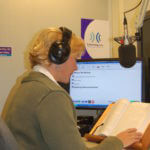
Curious About Becoming A Narrator? Learn To Fish…

by Ann Richardson

Putting in the time…

“Can I take you to coffee and pick your brain?” NO. READ THIS BLOG.

I began my narration career in 2008. That’s when the economy tanked and my job evaporated. I was lucky enough to have a husband with a stable job, and I now had the chance to finally figure out what I “wanted to be when I grew up”.

Having an unfinished degree in broadcast journalism, I decided to investigate if some aspect of that focus could work for me at this stage of my life. I attended a community education class about voiceovers and began voraciously researching the field. I read all the articles and columns I could find about it, listened to podcasts, took coaching and business mentoring in the voice over area, and was eventually directed to Recording For the Blind and Dyslexic, to volunteer narrating, in order to get a feel for audiobook narration. I was smitten. I knew it was what I wanted to pursue, and so I continued to volunteer recording for RFB&D (which is now known as “Learning Ally”).I joined the Audio Publishers Association and as many voiceover/narration/audiobook groups on social media that I could find.

It was a hell of a lot of work.

Good thing I’m a hard worker.

Now if you’re reading this, it means you must have some interest in checking out the field of audiobook narration; maybe you’re a friend from a former part of my life. The reason I’ve directed you to read this blog post is because people come to me more often than you’d think, wanting to pick my brain over coffee. Repeatedly, I’ve spent inordinate amounts of time crafting lengthy emails to friends who ask me about getting into narration, only to never hear from them again. So I finally decided to blog about it and simply invite inquisitive people to read it.

But why do I balk at being asked out to coffee for a brain-picking session? You’re asking for me to freely give the information I worked so very hard to learn and stay abreast of, for the price of a cup of coffee. My time is valuable, as is yours, no doubt. If I’m out having coffee, that means I’m NOT in the booth recording, or performing a myriad of functions that keeps my business running. I worked very hard to find out if this occupation would be viable, interesting, and something I could continue into my retirement years. You can do this too. If it’s important to you, you SHOULD do the footwork yourself. This is the best way to learn, and the lessons will stick far better than simply hearing about my experiences. Remember that old Chinese proverb: “Give a man a fish and you feed him for a day. Teach a man to fish and you feed him for a lifetime.”

An excellent starting point is to watch this video by acclaimed narrator, Sean Pratt.

He has narrated close to one thousand audiobooks, and is a narration coach. His advice is excellent.
Here are some additional helpful links to get you started:

www.narratorsroadmap.com (START HERE FIRST!)
www.audiobookmentor.com
https://www.deyaninstitute.com
https://patfraley.com
https://johnnyheller.com/
www.audiopub.org.

And if, after checking out these resources, you still want to spend time with me picking my brain about audiobook narration, my rate is $100 for a one-hour session. This is a very reasonable rate, and I will share with you what I have learned through my years of experience and hard work, plus answer your questions to the best of my ability.

ETHICS & ETIQUETTE: Common Sense Business Practices for Narrators

by Ann Richardson

ETHICS &ETIQUETTE: COMMON SENSE BUSINESS PRACTICES FOR NARRATORS
I debated whether or not to write this blog, because it could so easily take on a condescending flavor. I want to stress that I am not being judgmental when I share these points, and that I am the first one to admit that I am NOT PERFECT. However, I have been in this industry since 2008, and can safely say that if one makes the effort to take the following information into consideration, the professional pathway will be smoother.
I should mention that I am an active member of WoVO (World-Voices Organization), and in fact served on the Executive Board for three years. The reason this is pertinent is that a guiding pillar of WoVO is to help those new to the voiceover industry gain access to information that will help them learn and grow and achieve their goals in a manner that elevates the industry. I passionately embrace this philosophy. Many times I have shared the information written in this blog, both on social media, as well as in direct mentoring situations, one bit at a time. I figured it was time to consolidate it and put it in one location. So without further delay, I’ll launch into it…
ETHICS & ETIQUETTE

-Don’t trash talk anyone! How you use your words shows others who you really are. Mentioning others’strengths and fine qualities is much more beneficial for everyone within earshot than sharing an embarrassing story or spreading gossip about someone’s shortcomings. This especially includes never posting about another narrator’s poor reviews, whether they’re merited or not. How would you like it if someone publicly called out your performance in a less-than-flattering light?

-Don’t take credit for others’ work. Remember to mention/thank engineers, proofers, publishers, narrators, in public statements such as acceptance speeches or tweets or social media posts. Along this same vein, remember it’s not all about you. Engage others in a discussion about what they’re doing, what they’re interested in, or how they’ve handled something. You can even try to conduct an entire conversation without using the pronouns “I” or “me”.

-Try to have decorum/good etiquette at workshops and conferences (i.e. don’t interrupt conversations rudely, don’t shove your business card/demo CD/swag into others’ hands unsolicited, and in certain situations such as APAC, don’t discuss rates with your competitors.)

-Don’t abuse others’ good nature by expecting them to spoon-feed you your career. Do your homework. Google is very easy to use, and in social media it’s expected that you use the “SEARCH” function in groups before posting your questions there. There is a wealth of information to be found. Do your own due diligence. THEN you can come back to your favorite social media group and post your specific question. **NOTE** PLEASE READ AND CONSIDER THE FOLLOWING ADVICE CAREFULLY: When you have a question, consider who may be answering it. If posted on social media, you have the strong probability that everyone from non-narrators, to brand-new narrators, to hobbyists will enthusiastically and authoritatively give you their opinion. If you place value on your career and care about the audiobook industry, seek out those with lots of experience and a successful track record, and ask them your question (after you’ve researched it, of course). You will receive sound advice backed by a history of experience and knowledge. Got a problem with your recording chain, or the technical aspects of recording? Hire a professional engineer!

-Don’t out someone’s pseudonym. How someone chooses to record is their business, and is often a very personal decision. By sharing their identity, you may harm their potential to get hired to narrate some material. A pseudonym can be a means of protecting family and friends from embarrassment or hurtful situations.

-Always remember that as narrators, we have a collective reputation. Numerous times authors have shared with me their horror stories of narrators who act in a less than professional manner. This is especially pertinent in the indie writing sphere. Many narrators take a personal interest in encouraging authors to include audiobooks in their plans when they release their books. If an author has a bad experience with the process, it’s more probable that they will not attempt an audiobook in the future.

-Communication is paramount. Don’t assume your indie author knows how the process works, and be prepared to explain things that seem obvious and simple to you. Not everyone shares your level of experience. Helping someone learn a new skill or process promotes goodwill and excitement for a repeat experience!

SOUND BUSINESS PRACTICES
The following points are geared more toward conducting your narration business:

-Don’t lower your rates too badly. Obviously no one has the right to dictate what you charge your clients, but please remember that you are a professional, and as such, your peers would appreciate it if you charged accordingly.

-Perform each narration project as if you expect it to win an Audie. Don’t do shabby work because “it’s just a royalty share project” It all counts!

-Always obtain permission from the publisher before contacting an author

-Always obtain permission before mentioning your project on social media

-Respond to correspondence timely, invoice promptly, and pay your bills just as promptly.

-Follow directions! Read all instructions completely before beginning recording (example, record at 44.1, 16 bits, and follow file naming conventions, upload instructions, spacing at head and tale of files, etc.)

-Don’t miss deadlines: Seriously assess whether or not you can meet a deadline before accepting the book, and be attentive to your calendar so that you don’t forget about deadlines, or end up so short of time that the quality of your work is compromised in your rush to meet deadlines.

-Make sure your narration demo is representative of your capabilities/skillset. You don’t want to “bait and switch” by having a stellar demo and then not be able to deliver an equivalent level of quality from your home studio.

-Don’t party hard before an in-studio session, so that your voice and body cannot record at their best

-Audition ONLY for those projects which you are certain you can perform. I will expand on this to include that you MUST turn down a book you’ve been offered, if it is not a good fit. For example, pass it up if it is written from a man’s perspective and you are a woman (or vice versa) or if it’s heavily accented in a language you cannot affect.

-Pre-read, especially fiction.

-Research words in the manuscript or hire someone to do it for you. Remember that thing about using Google? Do that.

-Be accountable. So you’ve missed a deadline. Remember you’re a professional and you’re working with professionals and they probably don’t want to know about your infant’s blowout diaper, or the dog who ate your power cord, or or or or…. Just apologize, and get it right, and do your best to not let it happen again. Publishers will understand if you become ill, or if important life events get in the way. However, if you find you are always missing deadlines and making apologies, maybe it’s time to reexamine your methods and commitment. Working with you should be a relief for a client, not a trial. I recently heard a publisher say “Given the opportunity to replace a narrator who misses deadlines, we will.”

​I would enjoy hearing others’ ideas of etiquette and ethics in the audiobook industry…

  • « Go to Previous Page
  • Page 1
  • Page 2

Primary Sidebar

Categories

Ann Richardson Award Winning Audiobook Narrator Contact Headshot

Contact Ann

Ann works with big publishers as well as independently published authors. Reach out; she's happy to discuss your ideas!

This field is for validation purposes and should be left unchanged.
Ann Richardson Award Winning Audiobook Narrator Contact Headshot

Proud member of
SAG-AFTRA

Audiobook Publishers
Association

Professional Audiobook
Narrators Association

National Association
of Voice Actors

©2026 Ann Richardson // Voice Over Site by Voice Actor Websites

ann@annrichardson.com
MENU
  • Home
  • Demos
  • About
  • Coaching
  • Clients
  • Blog
  • Contact