ann@annrichardson.com
  • Home
  • Demos
  • About
  • Coaching
  • Clients
  • Blog
  • Contact

Engaging with listeners

Bad Reviews – How to Handle Them…

by Ann Richardson

           Prickly reviews are no fun.

This blog was difficult to write and has taken me more than two years to complete. This is because I firmly believe that what you focus on and look for will inevitably become reality. I combed through most of the books I’ve narrated, whether under my own name or my pseudonym, and culled out some of the worst comments reviewers made about my work. Now if you don’t think a steady diet of degrading, negative comments about your work will damage your outlook, you’re a bit naive, in my opinion. I had to put this blog on hold several times to lick my wounds, but I’m feeling confident now and want to post something that can potentially help others, so here goes!

Most seasoned narrators will tell you they’ve quit monitoring their reviews, mostly because they’re too busy narrating, but also because after a while one realizes that reviewers can be uneducated, mean-spirited, or maybe they’re fair and qualified to write a thoughtful review, but just don’t like the sound of your voice. These are things beyond a narrator’s control. But new narrators are prone to hanging on every word written about their work, and often ask mentors or coaches how to handle poor ones. Almost without exception, we tell newbies first and foremost, “DO NOT ENGAGE WITH A REVIEWER”; that never ends well. Next, we advise growing a thick skin and just keep on keepin’ on… UNLESS evaluations of their work contain a repetitive theme.  For example, if several reviews cite a narrator’s unusual lisp, or preponderance of odd pauses, or excessive lip-smacking, THEN it’s time to work on those things with a professional narration coach.  Lastly, when a new narrator is crushed by harsh words and begins to doubt their capabilities, or even if they should come within ten feet of a mic, we try to refocus them by pointing them back to a qualified opinion….”What does your coach say about your narration?”

A narrator can make or break an audiobook. A good one can tremendously improve a poorly-written book, and a poor performance can suck the life out of a well-written one. Every narrator I know works hard to make sure they’re being true to the text, not bringing it down. There are three people who really care about the narration of an audiobook: the author, the narrator, and the listener. We all want the very best audio production possible, but that’s not always the case. The following are some common, basically objective complaints about narrators:

-reading too fast/slow

-performing a bad foreign accent

-females poorly-performing the male characters

-males poorly-performing the female characters

-merely reading instead of performing, or not engaging with the story

-not differentiating between characters by changing voices, even slightly

-over-the-top characterization, or a repeating pattern in their vocal inflection

-noticeable background noise/poor recording environment/loud breathing/mouth noises.

And then there are the truly horrible comments that seem to purposefully stab at the narrator with a laser-focused intent to damage:

“The narrator’s voice is so whiney I couldn’t finish the book.”

“Narrator is terrible: So….a fifty year old narrates a female who is mid-twenties. In order to combat that, she speak softy [sic] all. the. dang. time. NOPE. The constant flashbacks were ANNOYING as HECK. JUST ALL AROUND…NOPE”

“Too long: It was difficult to follow when the narrator went from present to past. The narrator voice was annoying.”

“I’ve had to struggle to get past the narrator’s 20’s movie era whiny voice, don’t waste your time.”

“Terrible narrator. Horrible story line. Don’t waste your time, money, or credit. Couldn’t even finish it.”

“Narater [sic] was a massive let down. made no effert [sic…well, the whole review is one big “sic”] to try to do a male voice and tried to hard on the female voice over done and undergone I was dizzy shame as the story line was awesome.”

“NO! NO! NARRATOR ALERT!!”

“The only thing disappointing was the narrator. I will never listen to another audiobook by this narrator.”

OK, my feelings are beginning to feel sore, so I have to put a couple of positive reviews (for the same books garnering the poor comments above, by the way)…

“I loved the narrator; she has a lovely voice that is very smooth and enjoyable. She even had the whinny brat down to a T. There are no background noises just a rich enjoyable listen. It was easy to tell who was talking. Here male and female voices were very enjoyable. You could not tell if any breaks were taken. There were no high or low changes in her voice it was just a very pleasurable listen. For me she bought the story together as I could feel the pain or surprise of each character.”

“This narrator, as always, creates a cast of characters that are fun to listen to. Her voice is warm and sultry.”

“The narration was very good. The narrator was able to convincingly portray some immature college girls, their friends, and kids. Determination and strength came through very well. PLUS a lot of secondary characters were each given their own voice. Very good job, in my opinion.”

Now, here are some head-scratchers I’ve borrowed from fellow narrators, slightly paraphrased and names omitted, of course, because no one wants their poor reviews repeated all over the place.

“…the narrator in this book was so much better than the narrator of the other ones in the series – thank you for changing the narrator.” (The narrator was the same for all the audiobooks in this series.)

“This narrator did an adequate job, but their Irish accent was horrible. I don’t know how they let this get onto Audible.” (The narrator is actually native to Ireland.)

“The male narrator was fine, but the female narrator was horrible.” (It was narrated by one narrator…a female.)

“Narrator kept mispronouncing ‘mischevious’.” (This just stands on its own.)

“This narrator really needs to find another job. She ruins every book she narrates.  But she’s not as bad as ________. SHE sucks!” (It is important to note that when a review is especially vicious, one can click on that reviewer’s name and see other reviews they’ve written. More often than not, they’re serial trolls who get some sort of twisted gratification by trashing narrators and/or authors.)

I could go on and on sharing terrible reviews, kind of like celebrities sharing their own “Mean Tweets” as they’re often humorous, beyond comprehension, and frequently like watching a train-wreck that we can’t look away from… but like I mentioned before, I don’t believe in focusing on negativity.
Narrating Renia’s Diary

by Ann Richardson

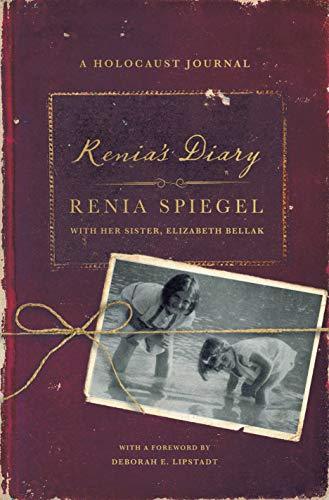
Renia’s Diary

Narrating Renia’s Diary

November 2019: I’ve been reading articles published with increasing frequency across media outlets such as The New York Times, Washington Post, The Guardian, and more, about “the Polish Anne Frank”.   The headlines read “Before there was Anne Frank, there was Renia Spiegel”.  It sends chills down my spine and my eyes fill with tears, because I feel I know Renia.

MacMillan Audio reached out to me earlier this year, asking me to audition for a diary narration project. It was Renia’s, having been dug out of a bank vault, where it had lain dormant for over 70 years, and was now headed to print and audio.  I was honored to be asked to audition, and hoped fervently that I did a good job, because memoirs and texts such as this are my favorite to narrate. I also feel strongly that these particular stories need to be told, and what a profound honor it would be to win the audition.

I was quickly notified that I won the project, and then trepidation set in. The amount of Polish, German and even Russian words was exhaustive.  MacMillan sent me brilliant audio recordings of a native Polish speaker pronouncing most of them, but I still had three pages of words that I had found on my own.  So I reached out to a local Polish school and arranged to meet with a lovely woman, Karolina Mancino, in a nearby library, to record the rest.

I also had concerns about recording conditions in my home studio. We were renovating our kitchen and in order to have the pristine, silent recording environment needed, I chose to record at night. It was a surreal experience, and put me, mentally and emotionally, in Poland during this time period. I imagined Renia, sitting in the darkness of her grandparent’s upstairs bedroom, carefully recording in her beloved diary, all the ups and downs of her daily life.  I felt as if I were physically sitting on the edge of her bed, watching her write, and continued sitting there, every night, entry after entry, through 700 pages, as she wrote. I wanted to hold her by the shoulders, peer into her eyes, and tell her earnestly, urgently “Go. Cross the bridge into Warsaw and be with your mother. Find a way to make it happen. YOU. MUST. GO.” She actually did go, but then returned, presumably to attend school.  The initial entry on January 31, 1939, at the age of 14:

“Today, my dear Diary, is the beginning of our deep friendship. Who knows how long it will last? It might even continue until the end of our lives. In any case I promise to always be honest with you, I’ll be open and I’ll tell you everything. In return you’ll listen to my thoughts and my concerns, but never ever will you reveal them to anybody else, you’ll remain silent like an enchanted book, locked up with an enchanted key and hidden in an enchanted castle. You won’t betray me, if anything it’ll be those small blue letters that people are able to recognize.”

Night after night I was an unseen observer in her world, as she navigated the murky, often turbulent waters of relationships with her grandparents, her little sister, Ariana (now known as Elizabeth Bellak), her schoolmates, and her first love, Zygmunt. She mourns her mother incessantly, and describes with love and exuberance, the way spring felt in her town of Przemyśl. But each entry has a current of grief, longing, and fear running through it.

“Now I live in Przemyśl, at my granny’s house. But the truth is I have no real home. That’s why sometimes I get so sad that I have to cry. I cry, though I don’t miss anything, not the dresses, not sweets, not my strange and precious dreams. I only miss my Mama and her warm heart. I miss the house where we all lived together, like in the white manor house on the Dniester River.”

And scattered throughout her entries, are poems she wrote. Her writing was cherished by those who were close to her, and recognized with honors in her classes at school. She seemed to find it easier to pour out her heartaches, observances and angst in poetry, than in her regular journaling.

“The moon swims out in silence

To shine in the sky, to shimmer for dreamers

While below a street rumbles shrilly

Crunching with  labor, hot and weary

Loud rat- tat- tat- tat of  human steps

Echoes from cobbled streets

Gray carts and their wheels

Groan and never miss a beat

Taxis whoosh ahead

And red tramways smoothly slide

On their tracks of steel

Stopping only sometimes

To take in yet again

Another mass of people

Then leave without complaint…”

As the pages continued, her observances grew more dire. Rail carloads of people were collected and shipped off to concentration camps. She recounts the day she was forced to wear a yellow Star of David on her clothing to designate her as Jewish, and she struggled with what it meant to her. In the Foreword, Deborah E. Lipstadt, Dorot Professor of Holocaust History at Emory University writes: “Was wearing it an act of compliance with a hateful regime or did it demonstrate a pride in one’s Jewish identity? We read of her reactions to passersbys’ comments. Some express solidarity and others pity. She reflects on them, not from a distance of many years, but on the day she encountered them.”

Each night, after turning off the lights, closing the door to my recording booth and crawling into bed in the early hours of morning, I found sleep elusive, my mind whirling in a sympathetic depression and anxiety, reexamining Renia’s life, word by word.

At the conclusion of the diary came the last entry, written by her boyfriend, Zygmunt. He had hidden Renia and his parents in an attic of an acquaintance in the ghetto, in an effort to save their lives. Their presence was leaked to the Nazis, and she was shot in the nape of the neck on the street, in front of him.

“JULY 31, 1942 Three shots! Three lives lost! It happened last night at 10:30 p.m. Fate decided to take my dearest ones away from me. My life is over. All I can hear are shots, shots . . .  shots. My dearest Renusia, the last chapter of your diary is complete.”

Despite having read this entry more than once as I prepared the text for narration, I had to leave the booth. Overcome by emotion, I sat in my bathroom and sobbed uncontrollably as the senseless, evil loss of life of an unimaginable number of people washed over me. It took me a long time to achieve composure and clear quality of voice, to continue narrating the Afterword and Notes Renia’s sister, Elizabeth Bellak, had written.

Renia’s niece, Alexandra Bellak, together with her mother, Elizabeth, filmmaker Tomasz Magierski and a team of translators, worked hard to bring this diary to life, after it sat dormant locked in a safe deposit box for decades. Renia’s Diary and other holocaust accounts I’ve narrated have shown me that evil like this can and will happen again, probably in my lifetime. These accounts are sacred and need to be shared far and wide. As difficult as they can be to give voice to, and I will not turn down these projects if they come my way. Their voices need to be heard.

Thank you, Renia.

The FUN Side-effects of Being An Audiobook Narrator…

by Ann Richardson

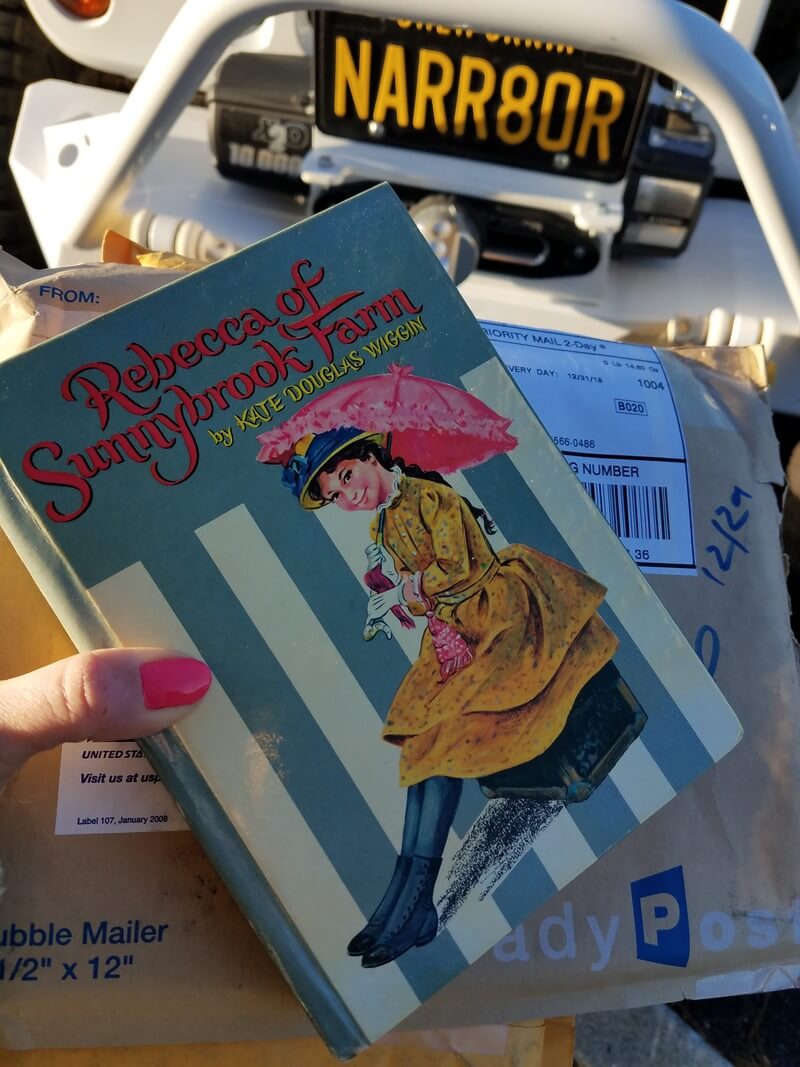
A kind listener, a new friend, took the time to send me this gift of a classic I’d narrated..

This summer, my dear husband and I celebrated our 30th wedding anniversary in Sedona, Arizona.  We love the area, the food, and the activities.  We took a “Pink Jeep” tour into some Indian ruins and did a little hiking. Our guide, Don, was articulate, genial, knowledgeable, and devoted to his occupation. We enjoyed the short drive to our destination as we each introduced ourselves and shared a smidgen about ourselves. The other couple was a teacher and her husband who loved woodworking. My husband was able to share some discussion about his affinity for woodworking, and when it came time to tell about myself, I said I was an audiobook narrator.  To my delight, the Jeep was full of enthusiastic readers and listeners! Don took us on a lovely tour of the ancient ruins and really piqued our interest in the local history.  As he dropped us off at the end of the tour, he asked for my business card, and indicated he’d like to listen to one of my narrations. So, I gave him one and told him to email me and I’d help him pick one he’d likely enjoy.

About 2 weeks later, Don emailed me, and I helped him find an audiobook he’d be sure to enjoy. The classic “Rebecca of Sunnybrook Farm” by Kate Douglas Wiggin, was what he settled on, and I mentioned how much I enjoyed narrating it. I mentioned, however, that I had never been able to find the original print book in any bookstores or antique malls, and then wished him happy listening.

Fast-forward to December 31, when I drove to the post office and picked up my mail. A package was waiting for me, and lo ‘n behold, it was an old hard-back copy of “Rebecca of Sunnybrook Farm” sent by my friend, Don! He’d vacationed in New England over the fall and came across it in an antique store and remembering my lament at not being able to find one, he picked it up and sent it to me. How cool is that!?

That is just the tip of a HUGE iceberg of nice people I’ve gotten to meet and know over the years I’ve been a narrator. The overwhelming good will, camaraderie, and generosity of my peers, clients and listeners have kept me afloat many times when I felt like quitting.

Other side effects of being an audiobook narrator?  Learning new words (at least to me) like “hirsute”, and “floccinaucinihilipilification”, and then trying to use them in casual conversation; knowing the proper way to say common abbreviations out loud, such as “I.E.”, texting shortcuts like “IKR”, and many Latin phrases, and TONS of biblical words. (All of this would make me seem a bit hoity-toity, if only I could remember them long enough to use them.) And the obvious draw, I got to read. All. Day. Long. I got to read the most fascinating books I would not have chosen for myself and broaden my horizons.

But one of the coolest side effects of being an audiobook narrator has been the ability to work from home and somewhat control my work schedule. I was able to be home in the afternoons when my boys came home from school, ready with a snack to get a recap of their day. I could take the dogs to their vet appointments mid-morning, and I could occasionally take off on a spontaneous afternoon fishing trip with my husband (knowing I’d be recording while they slept, to catch up and meet those deadlines.)

Aside from these wonderful benefits, I get the peace and joy of bringing an author’s words to life. That is really good for my soul.

Primary Sidebar

Categories

Ann Richardson Award Winning Audiobook Narrator Contact Headshot

Contact Ann

Ann works with big publishers as well as independently published authors. Reach out; she's happy to discuss your ideas!

This field is for validation purposes and should be left unchanged.
Ann Richardson Award Winning Audiobook Narrator Contact Headshot

Proud member of
SAG-AFTRA

Ann Richardson Award Winning Audiobook Narrator APA
Ann Richardson Award Winning Audiobook Narrator PANA

©2026 Ann Richardson // Voice Over Site by Voice Actor Websites

ann@annrichardson.com
MENU
  • Home
  • Demos
  • About
  • Coaching
  • Clients
  • Blog
  • Contact