ann@annrichardson.com
  • Home
  • Demos
  • About
  • Coaching
  • Clients
  • Blog
  • Contact

Audiobook Production

The FUN Side-effects of Being An Audiobook Narrator…

by Ann Richardson

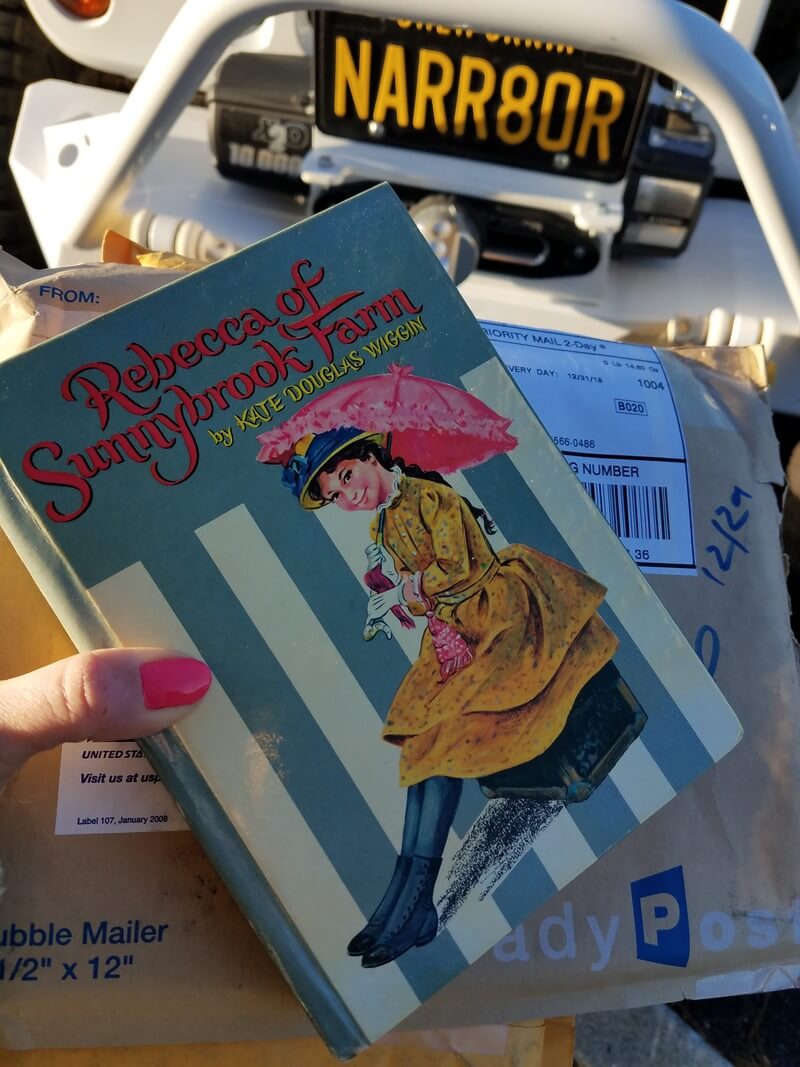
A kind listener, a new friend, took the time to send me this gift of a classic I’d narrated..

This summer, my dear husband and I celebrated our 30th wedding anniversary in Sedona, Arizona.  We love the area, the food, and the activities.  We took a “Pink Jeep” tour into some Indian ruins and did a little hiking. Our guide, Don, was articulate, genial, knowledgeable, and devoted to his occupation. We enjoyed the short drive to our destination as we each introduced ourselves and shared a smidgen about ourselves. The other couple was a teacher and her husband who loved woodworking. My husband was able to share some discussion about his affinity for woodworking, and when it came time to tell about myself, I said I was an audiobook narrator.  To my delight, the Jeep was full of enthusiastic readers and listeners! Don took us on a lovely tour of the ancient ruins and really piqued our interest in the local history.  As he dropped us off at the end of the tour, he asked for my business card, and indicated he’d like to listen to one of my narrations. So, I gave him one and told him to email me and I’d help him pick one he’d likely enjoy.

About 2 weeks later, Don emailed me, and I helped him find an audiobook he’d be sure to enjoy. The classic “Rebecca of Sunnybrook Farm” by Kate Douglas Wiggin, was what he settled on, and I mentioned how much I enjoyed narrating it. I mentioned, however, that I had never been able to find the original print book in any bookstores or antique malls, and then wished him happy listening.

Fast-forward to December 31, when I drove to the post office and picked up my mail. A package was waiting for me, and lo ‘n behold, it was an old hard-back copy of “Rebecca of Sunnybrook Farm” sent by my friend, Don! He’d vacationed in New England over the fall and came across it in an antique store and remembering my lament at not being able to find one, he picked it up and sent it to me. How cool is that!?

That is just the tip of a HUGE iceberg of nice people I’ve gotten to meet and know over the years I’ve been a narrator. The overwhelming good will, camaraderie, and generosity of my peers, clients and listeners have kept me afloat many times when I felt like quitting.

Other side effects of being an audiobook narrator?  Learning new words (at least to me) like “hirsute”, and “floccinaucinihilipilification”, and then trying to use them in casual conversation; knowing the proper way to say common abbreviations out loud, such as “I.E.”, texting shortcuts like “IKR”, and many Latin phrases, and TONS of biblical words. (All of this would make me seem a bit hoity-toity, if only I could remember them long enough to use them.) And the obvious draw, I got to read. All. Day. Long. I got to read the most fascinating books I would not have chosen for myself and broaden my horizons.

But one of the coolest side effects of being an audiobook narrator has been the ability to work from home and somewhat control my work schedule. I was able to be home in the afternoons when my boys came home from school, ready with a snack to get a recap of their day. I could take the dogs to their vet appointments mid-morning, and I could occasionally take off on a spontaneous afternoon fishing trip with my husband (knowing I’d be recording while they slept, to catch up and meet those deadlines.)

Aside from these wonderful benefits, I get the peace and joy of bringing an author’s words to life. That is really good for my soul.
The Angel in the Book (a true story)

by Ann Richardson

The Angel in the Book

I could see the puffs of my breath in the light of the streetlight, as I quickly trotted two houses down to my neighbor’s home, awkwardly juggling a Christmas gift tucked under one arm, a bottle of wine under the other, and a fruit tart in my hands. The women in my close-knit cul-de-sac have been gathering together for years now for our monthly bunco night, reveling in each other’s company and catching up on milestones and events around the ‘hood.

I knocked on her door. A rush of warmth, laughter and delicious smells met me as I stepped into her beautifully decorated home. Exquisite desserts and appetizers covered every available inch of space on the counters and kitchen table, and the livingroom table was heaped in anonymous gift bags and boxes to be exchanged later, in lieu of our usual bunco game.

The laughter and stories around the dinner table made the food taste even better, somehow, and there was no rush as we moseyed into the livingroom, dragging kitchen chairs in and squeezing all of us around that pile of unmarked gifts. A quick group photo, and then the game began. Our hostess read a special poem with directional words included in it, and upon hearing those words, the gifts were passed around sometimes to the left, sometimes to the right. At the end of the piece, we each had a different gift than when we’d started. One at a time we opened them, and if we wanted, we could “steal” someone’s gift instead of opening the one at our own feet, and so it was that I was the owner (briefly) of a plush, furry blanket, an electric wine bottle opener, a Moscow Mule set (alcohol included!), until finally, with one woman left, that was stolen from me, too! I’d had my eye on another decadently soft, fluffy blanket, and had every intention to steal it, when I saw there was one unopened gift bag left and felt compelled to choose it instead of the petty larceny I had planned.

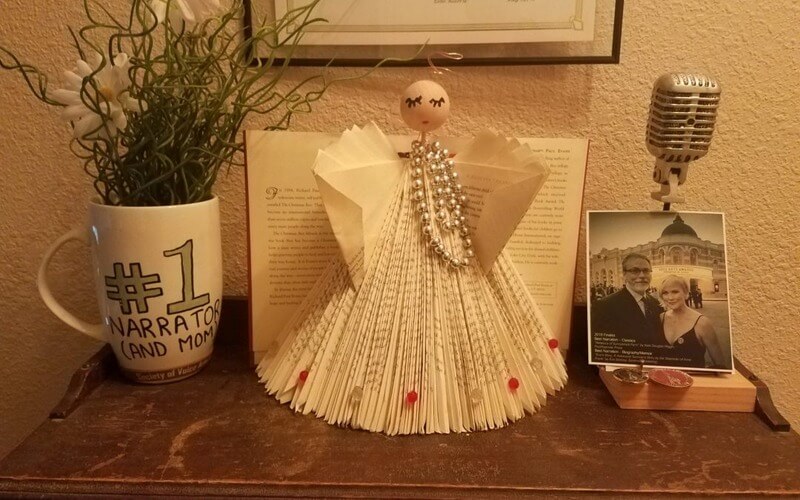
Out of the bag came a very beautiful angel, crafted skillfully from a book, it’s gown and wings formed by the folded pages. I, and many of my neighbors marveled at the coincidence of my ending up with that particular gift, since I am an audiobook narrator and thus, an avid book lover. Now, the premise of the gift exchange is anonymity, but I looked around those lovely faces in the circle and asked who made this gift that fit me so perfectly. The artist was across the room and raised her hand. She said, “I was thinking of you when I made that.” I got a little choked up as I thanked her, and with blurry eyes, looked it over again, and then gently placed it back in its bag.

The gift exchange over, we began to disperse, some of us refilling a wine glass or nibbling on an hors ‘d oeuvre, or just moving to chat with someone we hadn’t had a chance to talk with yet. The artist came over to sit by me and explain how the angel was made, and another neighbor came over and asked what book was used to make the angel. I brought her out of the bag and as I turned her over in my hands I froze, my heart stopping for a moment when I read the title of the book, “The Christmas Box” by Richard Paul Evans. In a flash I was transported to 1995, sitting by my father’s bedside in the hospital. The flashing lights of a heart monitor and the rhythm of the respirator breathing for him weaving a sad background to my voice, as I read this very same book aloud, to his unresponsive face. I remembered the smell of sterile equipment and the faint aroma of the peach lotion my sister and I had massaged into his feet and hands earlier in the day. But in the wee small hours of the morning, there I sat in his darkened room in the ICU, tears streaming down my face, as I read him this beautiful Christmas story about a widow and a young family that comes to live with her.

Quickly refocusing my attention on the here and now, and the book-angel in my hands, I couldn’t contain the sob that escaped me, and tears began to course down my cheeks. I was so embarrassed to be crying at this happy gathering, and felt my face grow red as I tried to squelch the emotions that overwhelmed me. My angel-maker gracefully and perceptively distracted me by describing how she crafted the gift, and I was so grateful for the chance to regain my composure, if only for a moment. I wanted to share with everyone how touched I was by this poignant coincidence, but every time I opened my mouth, my voice quavered in a high-pitched choking sound, and I would break down again. I think word eventually made it around the room, and my dear friends who were not clustered around me as I blathered, now all know the reason for my emotions.

The day after the party, as I write this, my emotions are still raw and near the surface, and I feel a headache coming on from the effort of keeping them under control. I need to get into my recording booth and finish narrating a book whose deadline is a bit too close for comfort, and if I cry, I lose half an hour of valuable work time, due to the drippy nasal tones that will be audible I my voice. I have placed my book angel outside my booth on my great grandmother’s antique sewing machine, which houses my recording equipment. There she will stay, long after the Christmas decorations have been put away in the garage. I am so grateful to have been in the presence of dear friends when this happened, and I am also grateful that the memory of my father is present with us this Christmas in a new and beautiful way.

How Do Narrators Know How To Pronounce Stuff?

by Ann Richardson

“Never make fun of someone for mispronouncing a word. It means they learned it by reading.” Anonymous

Tongue-tied in the booth.

HOW DO NARRATORS KNOW HOW TO PRONOUNCE STUFF?
You’re listening to an audiobook and the narrator smoothly and confidently rattles off a word that’s quite lengthy, unfamiliar, and odd-sounding. You’re flummoxed, discombobulated, and you marvel at the reader’s elocution.  To be honest, the author’s generous sprinkling of such large words seems pedantic to you at times, but secretly you’re wondering if you’re just under-educated.  Well, don’t feel badly. Although overwhelmingly narrators are very well-read and possess a larger-than-normal vocabulary, many of them still look up the pronunciation of words that, at first glance, would seem simple in their pronunciation.

A NARRATOR’S GOT TO KNOW HIS/HER LIMITATIONS
Good narrators recognize that geography, demographics, and even economic status can play a large role in how certain words are pronounced.  I narrated a book about food in which the word “grocery” was used liberally.  I’m from the near center of the United States, and we’ve always said “grow shree”, but I was fully aware that other parts of the county pronounce it “grow sir ee”. I had to email the producer and ask what they preferred.  Another example: in most parts of the country cowboys and cowgirls participate in an event involving skill at riding horses and bulls. This is called a “ROE-dee-OH”, unless you’re in Salinas, California, where it’s called a “roe DAY oh”. Or, if I’m narrating a book set in New York, and the street “Houston” appears, I know (only because I’ve been there) that it’s pronounced “house-tun; but before I’d visited New York I would have automatically pronounced it “hyoos-tun”.

BOOK PREPPERS – AN INVALUABLE RESOURCE
These pitfalls are a major part of why many narrators hire professional book preppers. A professional book prepper charges around $25 per hour to read through a book, note unusual words and proper nouns, look up the pronunciation, and create a spreadsheet for the narrator to use for reference.  Preppers may also take notes on the characters in the book, listing anything mentioned in the text that could help a narrator form a voice for that person. For example, did the character grow up in a Southern state? Does he/she have a lisp? Speak rapidly? Stutter? In addition, the prepper may give notes summarizing the arc of the story, chapter by chapter. All of these help a narrator visualize the performance.

ONLINE RESOURCES
But what if a narrator cannot hire a prepper and must do the research him/herself?   When this happens to me, I pre-read the book and create a spreadsheet of words for which I must look up pronunciations. Often, if I’m narrating for a large publisher, I receive instructions on which sites to use when researching, and in what order of preference. Otherwise I search sites such as Forvo.com, Howjsay.com, YouTube.com, YouGlish.com, Hearnames.com, and pronounce.voanews.com. (I make sure to find several different sites’ pronunciations, because there are variations among the sites, especially YouTube, and go with the pronunciation that’s used most often.)

Another amazing resource to use when narrating a book with foreign language throughout, is AudioEloquence.  This is a language, dialect, and accent research website maintained by my fellow narrators and all-around swell women, Judith West and Heather Henderson, specifically for audiobook narrators. This site is not a pronunciation site per se, but rather a listing of websites that focus on specific languages.  For example, say you’re narrating a book on the Inuit tribes and you visit Audio Eloquence. You scroll down to ”PRONUNCIATION SITES BY LANGUAGE” and look for Native American languages, then, logically, Inuit resources. You see this link:  Inuktitut Tusaalanga: Glossary,  follow it, and BINGO! You’ve found everything you need in order to speak their words as if you just came off the ice flow with a sled-full of whale blubber for your winter food supply.

Now the last super-resource for narrators is relatively new. It’s www.pronounceology.com. Brainchild of accomplished narrator, Adam Verner, it is a subscription service that does all of the work for a narrator with a long list of words to research. Here’s an excerpt from the site: “Pronounceology allows you to search multiple online dictionaries at once, in bulk…You can import search terms in multiple ways, including cutting and pasting a word list, type directly into the search box, import a spreadsheet, or upload a highlighted PDF.  Pronounceology then takes your search terms and runs them through online dictionaries to find you one authoritative result.”

CALL AROUND
Let’s say you’ve been trying mightily for hours to find a pronunciation of a proper noun online, to no avail. You’ve posted your problem word in the Face Book narrators groups, begging for help, but it’s in the wee hours of the morning and no one is replying. (We narrators are prone to working into the night because:

  1. it’s quieter than midday, when the leaf-blowers, UPS trucks, kids, circling airplanes and solicitors are out in full force,
  2. it’s cooler in the summer hours, when we sit, sweating in our hot-boxes narrating, and/or
  3. we’ve over-committed to too many narration projects and our deadlines are impossibly short).

Picking up the phone and calling around is usually fruitful. Bars, ethnic restaurants, libraries, embassies, airlines, and city and county non-emergency phone centers are very helpful places to phone to hear how a local pronounces things. Even if the business or office is closed, chances are the voicemail greeting will be helpful, especially if one is calling to hear the pronunciation of someone’s name.

And about pronouncing a person’s name… YouTube has wonderful resources, and the most beneficial I’ve found have been recorded interviews, where the speaker is introduced. I specifically stay away from TED talks, because almost as a rule they never include speaker introductions! And besides that, I always get sucked into watching a couple of them while I’m at it; they’re fascinating, and before I know it I’ve lost an hour of productive recording time.

ASK FRIENDS
If a narrator is still unable to find the pronunciation needed by searching online, it’s time to get creative. Facebook has been a wonderful resource for many narrators, and it’s not uncommon to see a post in one of the various narrator forums that goes like this: “Hey, hive mind, I’m narrating a book set in medieval Scotland and one of my characters has a Scandinavian servant who grew up in Mesopotamia. Anyone know how to pronounce Olgaherodustonflug?”  And then half a dozen narrators will comment, usually with something facetious and irreverent, but more often than not, someone will have a solid answer.

Here’s an example of a recent plea for help in one of the narrator groups: (all names have been deleted for privacy.)

OP: “Any Scots able to help me with the pronunciation of this: Thaeilean-beag’wighleisa’bhith a’gabhail luchd-tadhail?

Narrator #1 – Scots is pretty similar to Irish Gaelic and I can usually reason out what the pronunciations are from that. Having said that, I’ve never seen some of those words. Is this definitely correct? I’ll ask around and see if I can find someone who can help.

Narrator #2 – Checking with my native Scots friend!

Narrator #2 – Sorry. Apparently, she’s from the Lowlands and they don’t do Gaelic, which is what she says that looks to be.

Narrator #3 – if it’s in fact Scots Gaelic, it’s one of the most endangered of Celtic languages… or so it says HERE (and you might give them a call, maybe they could help you out). https://sbs.arizona.edu/…/ua-researchers-help-preserve…

Narrator #4 – Let me see if my Scottish cousins have any advice! This is a closed group so I can’t just tag them in.

Narrator #5 – Unless they live in the Western Isles or the far north, don’t bother. Only a few places teach Gaelic now  https://www.tiree.argyll-bute.sch.uk/contact-us  The High School on Tiree teaches Gaelic. Might be worth sending them a message.

I never followed up to see if the OP got her answer, but I’ll bet she did.

Here’s another scenario that recently played out for me:

I was tapped by a publisher to narrate a holocaust survivor memoir. The author lived in the Netherlands prior to being sent to Birkenau (a concentration camp in Poland) and as you can imagine, there were many Dutch places, names and words that were going to take me days to research on the internet. Unless……hmmmm…  I packed up a couple of jars of prickly pear cactus jelly I’d just made, grabbed my cellphone and spreadsheet of the words in question, and walked two doors down to my neighbor, Ingrid, who happens to be from the Netherlands! She graciously went through my list, pronouncing the words for me while I recorded her on my cellphone and quickly scribbled down the phonetic pronunciation on my spreadsheet. She was happy to help, was tickled with my bribe of the jelly, and it took less than an hour to get all of my pronunciations from an expert.

WE ARE HUMAN
Now, with all these research methods and resources, let me be perfectly clear:  narrators are humans, and we do make mistakes. Sometimes the issue is not us; publishers, editors, or directors may want us to pronounce something differently than we have learned it, and even when we gently assert that we’ve got proof that it’s pronounced “our” way, in the end it’s not our decision. (Don’t get me wrong, although we may differ on pronunciations occasionally, these demigods save our bacon innumerable times per project and we LOVE THEM!) We also have that blind spot; remember my example from earlier?  Houston St. in New York is pronounced “House tun” and not “Hyoos tun”.

So, dear audiobook listener, we love you, and hopefully this blog has shed some light on the behind-the-scenes production of an audiobook. But please remember when you’re writing your review and you’re about to lambast us for pronouncing Kearney, Nebraska, as “kern ee” instead of “karn ee”, that we may have never been to Kearney and did not know it was a tricky pronunciation, or maybe we were told by the director to pronounce it “kern ee” despite our protest and subsequently losing the arm wrestling match we suggested to settle the deal. Or… maybe it’s you. Have you ever found out, late in life, that you’ve been pronouncing something wrong the whole time?  It happens. Please be kind.


It’s hard work, pronouncing all that stuff…

Curious About Becoming A Narrator? Learn To Fish…

by Ann Richardson

Putting in the time…

“Can I take you to coffee and pick your brain?” NO. READ THIS BLOG.

I began my narration career in 2008. That’s when the economy tanked and my job evaporated. I was lucky enough to have a husband with a stable job, and I now had the chance to finally figure out what I “wanted to be when I grew up”.

Having an unfinished degree in broadcast journalism, I decided to investigate if some aspect of that focus could work for me at this stage of my life. I attended a community education class about voiceovers and began voraciously researching the field. I read all the articles and columns I could find about it, listened to podcasts, took coaching and business mentoring in the voice over area, and was eventually directed to Recording For the Blind and Dyslexic, to volunteer narrating, in order to get a feel for audiobook narration. I was smitten. I knew it was what I wanted to pursue, and so I continued to volunteer recording for RFB&D (which is now known as “Learning Ally”).I joined the Audio Publishers Association and as many voiceover/narration/audiobook groups on social media that I could find.

It was a hell of a lot of work.

Good thing I’m a hard worker.

Now if you’re reading this, it means you must have some interest in checking out the field of audiobook narration; maybe you’re a friend from a former part of my life. The reason I’ve directed you to read this blog post is because people come to me more often than you’d think, wanting to pick my brain over coffee. Repeatedly, I’ve spent inordinate amounts of time crafting lengthy emails to friends who ask me about getting into narration, only to never hear from them again. So I finally decided to blog about it and simply invite inquisitive people to read it.

But why do I balk at being asked out to coffee for a brain-picking session? You’re asking for me to freely give the information I worked so very hard to learn and stay abreast of, for the price of a cup of coffee. My time is valuable, as is yours, no doubt. If I’m out having coffee, that means I’m NOT in the booth recording, or performing a myriad of functions that keeps my business running. I worked very hard to find out if this occupation would be viable, interesting, and something I could continue into my retirement years. You can do this too. If it’s important to you, you SHOULD do the footwork yourself. This is the best way to learn, and the lessons will stick far better than simply hearing about my experiences. Remember that old Chinese proverb: “Give a man a fish and you feed him for a day. Teach a man to fish and you feed him for a lifetime.”

An excellent starting point is to watch this video by acclaimed narrator, Sean Pratt.

He has narrated close to one thousand audiobooks, and is a narration coach. His advice is excellent.
Here are some additional helpful links to get you started:

www.narratorsroadmap.com (START HERE FIRST!)
www.audiobookmentor.com
https://www.deyaninstitute.com
https://patfraley.com
https://johnnyheller.com/
www.audiopub.org.

And if, after checking out these resources, you still want to spend time with me picking my brain about audiobook narration, my rate is $100 for a one-hour session. This is a very reasonable rate, and I will share with you what I have learned through my years of experience and hard work, plus answer your questions to the best of my ability.

FAQs About Audiobook Creation

by Ann Richardson

FREQUENTLY ASKED QUESTIONS ABOUT AUDIOBOOK CREATION
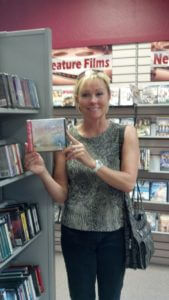
One day, my young son and I were shopping for a wedding gift for a friend. As always, I made my way to the audiobook section to see what was on the shelf.  Lo ‘n behold, I was tickled pink to find one I’d narrated!  It struck me then, that most folks have no inkling of how audiobooks are produced.  Why should they? UNLESS YOU’RE AN AUTHOR.The audiobook industry continues to grow at an astounding rate, as evidenced by double-digit increases in sales annually. If an author neglects to plan for an audio version of his or her work, it’s tantamount to leaving money on the table. I’m relieved to say that many of today’s authors are very familiar with the benefits of releasing their books in audio format, and even bank on the popularity of the narrators they choose, to attract and build a loyal fan base. However, some authors are still unsure of what is involved in the creation of an audiobook, and this blog aims to answer the more frequently asked questions.

Q: Where do I begin?
A: There are two main avenues for audiobook publishing. For many rights holders the most popular route is through “Audiobook Creation Exchange”(www.ACX.com), which is Audible’s audiobook publishing platform and is owned by Amazon. (A rights holder is the person or entity that owns all rights required to make a book available for production and distribution as an audiobook. This may be the book’s author, a publisher, a literary agent, or the author’s estate.) For those rights holders who publish their books with a traditional publisher (for example, HarperCollins, Penguin Random House, etc.) those publishers will also usually produce the audio version of that book. Both of these avenues of producing audiobooks will ultimately list the audiobooks on Audible and iTunes for retail sale. For this blog, I will focus solely on audiobook production using ACX, and since most audiobooks are downloaded, I’ll skip over explaining about producing an audiobook on CD.

Q: How much will it cost me?
A: There are many factors that impact the cost of audiobook production. If you decide to use ACX to make your audiobook, your expenses are largely dependent on what you choose to pay your narrator. Rates for narration can be structured in three ways: royalty share, pay-per-finished hour, and a hybrid of the two where the rights holder and producer agree to a royalty share contract, but separate from ACX, agree to an additional pay-per-finished-hour contract.
Royalty share means that you pay nothing up front to your narrator, but when the book is sold, you and the narrator share a percentage of the profit. This can be up to 40%, split between the two (meaning the narrator and the rights holder each get up to 20% of the profits) But this is not quite an accurate view of earnings, as many audiobooks are purchased from Audible with credits. When a narrator auditions for a royalty share book, several factors are taken into consideration. Some of the criteria used to predict whether it will be worth the narrator’s time to record, include sales of the ebook, (not simply downloads, but actual sales), if the author has a robust marketing plan, the social media presence an author maintains, the genre of the book (paranormal romance will typically sell better than a non-fiction book about glaciers, for example), how prolific an author is, and if the book or author has won awards. Royalty share books will also attract newer narrators, as many of the more experienced narrators command compensation beginning at $250 per finished hour. Most narrators have experienced narrating at least one audiobook on royalty share basis, and never even came close to recouping decent payment on it.
If you choose to pay your narrator per finished hour, ACX has tiers of payment from which the rights holder can choose, which are calculated by how long your audiobook ends up being. These tiers are 0-$50, $50-$100, $100-$200, $200-$400, and $400-$1000, paid per finished hour. You may think that this is excellent pay for just reading aloud! But keep in mind the industry average seems to be that 6 hours are needed to record, edit, and master 1 finished hour of audio. (“Master” means to apply certain effects to the audio files to enhance the sound.) Depending on the narrator’s skill and the difficulty of the text this number could be less or greater than 6 hours. Obviously if your book contains complicated character names, numerous foreign words or phrases, or other text which requires additional research before narrating, it will take longer for the narrator to produce that one finished hour. Here’s an example: a non-fiction book chronicling the history of the pharmaceutical industry ends up being ten hours long. You can bet that the narrator had extensive research to do in order to make sure he/she could accurately pronounce all those company and drug names. All of that tricky verbiage will also slow down the narration process, and then the time spent editing will tend to be longer, as well, to make sure pacing and pauses sound natural. A book like this could take more than 60 hours to produce! So paying $200 per finished hour for a ten-hour audiobook is not exorbitant at all, when one considers the amount of work that goes into each production.
The third payment option that is cropping up more and more, is a hybrid deal, where the narrator agrees to perform the audiobook for royalty-share, and also enters into an agreement on the side (separate from ACX) in which the rights holder pays a per-finished-hour rate, usually much lower than what the narrator would normally agree to. For example, the rights holder and narrator agree to ACX’s royalty share agreement, but exchange emails on the side and establish an agreement for the rights holder to pay $100 per finished hour upon completion of the audiobook. (The amount the RH pays is not set in stone at $100 pfh. Hybrid deals are negotiated, so the RH could pay less or more than $100pfh + royalties.) ACX is aware of this practice, and has no issue with it.

Q: How much money will I make off of my audiobook?
A: It depends! Factors that affect how an audiobook sells include the popularity of the author as well as the narrator. Also the author’s marketing strategies and content of the book have significant impact.

Q: Should I narrate my own book?
A: You may be familiar with the phrase: “Don’t try this at home.” We are further cautioned that attempting to do whatever it is we’re watching that we think looks easy; we will probably end up with unfortunate results. The same phrase is a good rule of thumb for audiobook narration. While an author might think they would naturally be the best choice of narrator for their own work, this is usually not the case. The exceptions occur mostly in non-fiction, or in the rare instance that the author is an outstanding performer. Professional narrators study their craft, invest in professional training, and are able to connect with the text, often utilizing accents and other vocal techniques in order to best portray the author’s intent. A good narrator can believably portray both male and female voices by simply altering their breathing, tone and pitch, but it is often an acquired skill that the narrator has practiced and honed over time. In addition, most professional narrators are capable of operating their own recording software and have a good working knowledge of the various pieces of equipment needed to produce an outstanding recording. They typically invest thousands of dollars into high-quality equipment and in developing a sound-proof environment in their home, in which to record. They are cognizant of how certain foods and drinks affect their ability to enunciate clearly and without digestive “sound effects”, and also know how to care for their voice so that they sound consistent throughout the recording. A good narrator can often make the story an engrossing experience for the listener, whereas an untrained individual (even if they wrote the story!) may perform the text in such a way that the listener is bored, disinterested, or even irritated, and may ultimately quit listening, or even worse, write a bad review for the audiobook.

Q: Where can I find more information about the audiobook industry?
A: There is a wonderful organization called “Audiobook Publisher Association” or, the APA (www.audiopub.org). The website features news articles about the APA and the industry, and provides links to press releases and recent coverage organized by date.
There is also a magazine called “AudioFile” (www.audiofilemagazine.com) which is published six times a year. It is a print and online magazine whose mission is to review unabridged and abridged audiobooks, original audio programs, commentary, and dramatizations in the spoken-word format. The focus of reviews is the audio presentation, not the critique of the written material. AudioFile is a great resource to go to when one is looking for a publisher, narrator, or simply to keep up with the industry.

I hope this blog has proved enlightening about audiobooks and their production. I welcome your comments and questions!

  • « Go to Previous Page
  • Page 1
  • Page 2

Primary Sidebar

Categories

Ann Richardson Award Winning Audiobook Narrator Contact Headshot

Contact Ann

Ann works with big publishers as well as independently published authors. Reach out; she's happy to discuss your ideas!

This field is for validation purposes and should be left unchanged.
Ann Richardson Award Winning Audiobook Narrator Contact Headshot

Proud member of
SAG-AFTRA

Audiobook Publishers
Association

Professional Audiobook
Narrators Association

National Association
of Voice Actors

©2026 Ann Richardson // Voice Over Site by Voice Actor Websites

ann@annrichardson.com
MENU
  • Home
  • Demos
  • About
  • Coaching
  • Clients
  • Blog
  • Contact