ann@annrichardson.com
  • Home
  • Demos
  • About
  • Coaching
  • Clients
  • Blog
  • Contact

Audiobook

Narrators – Would You Want to Work With You?

by Ann Richardson


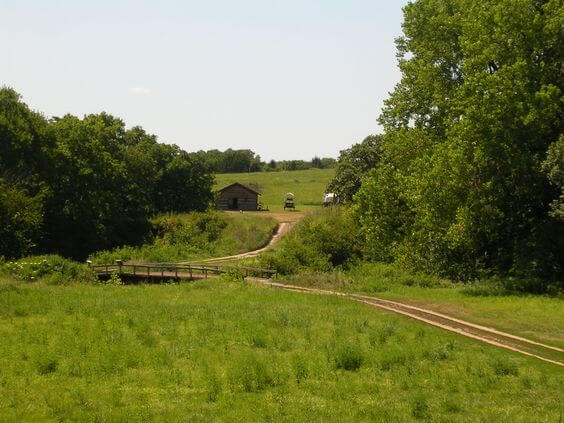
Oregon Trail wagon wheel ruts, Rock Creek Station, Nebraska (photo credit Linda Dahlberg)

The career advice that has helped me the most…
When I began pursuing audiobook narration, I was no stranger to the ways of being an independent contractor (freelancer).  I had just come off of a four-year stint as an after-market sales person in the automotive industry. I like to think of it this way:  I did the impossible, I sold things to car dealers. It entailed traveling over 500 miles per week in the San Francisco bay area, visiting some very upscale, high-line dealerships, as well as some tiny used car lots in some very sketchy corners of places like Oakland and Richmond. Once I acclimated to the environment and learned how to “speak the language” I was able to move past my trepidation of doing my job in a male-dominated industry, and to serve my clients with efficiency and competency with a caring, personal touch. If my client asked me a question and I didn’t know the answer, I figured it out quickly and helped them solve their issue. I made it my goal to know every dealership personally, including the departments with which I interfaced. I knew the rates my company charged them on which products, I knew the intricacies of their insurance policies, I knew the demographics of their clientele, and I knew each dealer principal, general manager, finance manager, detail department head and service department manager by name (as well as many receptionists and janitors). I visited close to 100 dealerships a month. I knew how to hustle, and I grew a thick skin. I also learned to treat my career with much respect, and not settle for mediocrity. If I needed an answer, I went to the best possible sources to discover it. If I wanted to present a product to a dealer, I learned not to begin with anyone less than the ultimate decision maker. I did not trust leaving my materials or messages with subordinate employees to pass along to the owner. I did not trust second-hand answers, and I did not make excuses for not delivering what was needed or expected.

How does this translate to audiobook narration? It’s all about integrity and developing good habits. If you treat your narration career as if you are the best of the best and adhere to a few simple principles, you will go far. We all have what I like to call “wheel ruts”. (Did you know that the Oregon Trail’s wagon wheel ruts are still visible in at least nine places in the US?)

Practice makes Permanent, not Perfect (only perfect practice makes perfect)
If you audition on a casting site, and you are not ready to deliver an awesome product on time (i.e. recorded on good equipment, edited and mastered up to industry standard, performed to your best ability for which you’ve been trained) you are forming those wheel ruts. You make excuses like “I wasn’t happy with my audition because my new mic had not been delivered yet” or “I think there was some background noise in my audition because my two toddlers were wrestling with the dog” and you submit it anyway just to see what happens, then you’re etching those ruts deeper. You’re allowing yourself to turn in sub-standard work and it becomes easier each time you do it.

Or you don’t take the time to make an excellent demo to post on your website or profile on the casting sites. You instead post a sample you thought turned out “pretty well”, or you even sink to the level of posting or submitting a commercial demo.  Nothing screams “I’m unprepared, I’m a newbie, I haven’t taken the time or care to do it right and I won’t when it comes time to voice your book, either” like poor presentation of your skills. And those wheel ruts get cut deeper.

Say you post a question in social media group, and you begin with the phrase: “I did a search of the group but didn’t find anything, maybe it was because the UPS man delivered my new hula hoop and I got distracted, so anyway…” and you query something for which you haven’t even tried to research or figure out on your own. You’re not only digging those wheel ruts deeper, but you’re now broadcasting to peers and potential clients that you don’t care enough to put in the time and effort to figure it out on your own.

Set high standards for yourself and stick to them!
This is manifested in the following ways:

Don’t audition if you don’t have the proper equipment, recording environment, performance skills, or ability to deliver on-time.  I know it’s hard to restrain yourself when you find a project that you feel would be perfect for you, but if you want to avoid digging wheel ruts in the wrong direction, you’ll hold yourself back until you’ve made sure you’re able to deliver the best you are capable of. I recently saw a quote somewhere that said “You wouldn’t criticize a flower bud for not emerging fully bloomed” and this is salient here. No one expects you to be stellar right off the starting line. But if you know your efforts are half-baked and you’re turning out a product that you know you can do better, then don’t do it!  Wait and work toward achieving the best you can, and THEN submit it.

Don’t trust your career to social media. Be aware that if you want your career to skyrocket to success, you have to feed it only the best things. Seek out professional coaching if you have a performance question or issue. Contact the organization you’re having trouble with (for example a question on a casting site, or professional association) before you take it to Facebook and complain to the group. Hire a professional engineer/editor when you have technical issues. By posting your question on social media, you have no control over who is responding.  John Doe may respond with astounding authority, and you feel your question is unequivocally answered, but if you do a quick search on him on Audible, you discover he’s narrated three 45-minute cookbooks. Not exactly the top-of-the-line advice you need.

Ask yourself: Would you want to work with you?
When performing, communicating with clients, or posting on social media, are you living up to excellent standards?  Or do you find yourself continually making excuses as to why something you’re doing is not up to par? Do you regularly miss deadlines? Or are you conducting yourself in a professional manner that encourages repeat business? This entails learning and practicing thoughtful responses, posts and emails. You should conduct your business as if it’s the white-glove service those ritzy hotels provide. These are good wagon ruts to form and stay in.

You’re only human; you have to start somewhere and you will make mistakes. But if you strive to be the best, continually reassess your actions and reactions, and seek out the very best when you need an answer or advice, then your trajectory cannot help but shoot skyward. Perfect practice makes perfect.
FOR NARRATORS JUST STARTING OUT – “Best Practices”

by Ann Richardson

Best Practices are there for our safety

FOR NARRATORS JUST STARTING OUT– BEST PRACTICES
Social media is rife with advice for audiobook narrators. Usually we’re giving it to one another, and usually it’s hit or miss whether you get solid, “best practices” advice from seasoned pros. Newbies are quick to chime in with their experiences, and fellow newbies don’t always take the time to “Audible” the advice-giver (narrators’ equivalent of “Googling” someone) to make sure they’re qualified to stand as an authority, and thus, absorb faulty, misleading, or plain wrong information.

I’ve put together a general list of “Best Practices for Audiobook Narrators” that will hopefully clarify some questions that surface in our community, over and over and over and over… As with anything, do what you want to, new narrators, but please know that these points are time-tested and true.  Can you become successful in other ways? Yes, you can, anything is possible, but the guidance in this blog is here to help you, to smooth your way, and hopefully help our industry avoid poor-quality audiobooks which may dissuade listeners from continuing to listen to audiobooks.

Before I launch into the list, this must be stated: LISTEN TO AUDIOBOOKS. Listen attentively. Many of the questions that are brought up on social media can be answered by listening to good audiobooks! If you’re not sure what a good audiobook is, subscribe to AudioFile Magazine and it’s newsletters, and read them word for word. This is very important. Now, on to the meat and potatoes…

  1. DON’T QUIT YOUR DAY JOB. Being an audiobook narrator is not an instant income replacement for a full-time employee in nearly any field. It takes money to make money, as you’ll see in subsequent points. The reason this is number one, is that if you don’t have the money to start this career journey the “right” way, you’ll be tempted to cut corners on vital things such as hiring a professional proofer/editor/mastering engineer, or purchasing legitimately solid equipment, or getting professional coaching in performance and business aspects of this occupation.
  2. GET PROFESSIONAL COACHING. Audiobook performance is not simply reading aloud. Different genres require different performance techniques. The business of being an audiobook narrator should also not be approached on a “seat of your pants” philosophy. A business coach can help you chart a course for growth, both financially and in relation to your portfolio. VET THE COACH BEFORE YOU HIRE HIM/HER. There are excellent coaches, and then there are those who don’t have the experience in the industry that would qualify them to instruct others. If you’re unsure how to vet a coach, lurk on the social media groups for narrators and pick a seasoned pro to private message and ask them for their recommendations. You could also do a search of the group to find posts that contain coaching recommendations/endorsements.
  3. PURCHASE EXCELLENT EQUIPMENT. You don’t have to go for the top-of-the-line most expensive microphone you can find, but do not start out with bargain basement equipment, hoping to make enough money to later upgrade. Industry standard for audiobook recording is a large diaphragm condenser microphone that plugs into a preamp, that boosts the signal that goes into your computer and then your recording software. Key to purchasing equipment that will best serve your needs is to test it first, optimally, in the place where you will be using it. Some retailers will let you return microphones, so if you purchase several and do a mic shootout in your own recording space, you can return the ones that don’t sound so good for your voice. It’s a very good idea to hire a professional engineer to help you pick the right equipment, especially the right mic for your voice, as well as guide you in creating a nice, quiet environment in which to record.
  4. LEARN ABOUT THE INDUSTRY. Be voracious in your learning. Join as many audiobook and narrator social media groups as you can, and comb through the posts. Use Google to research publishers, fellow narrators, equipment, sound-proofing your booth, and many more things. Basically, if you can think of a question, do the very best you can to research it before you give up and ask someone. Of course, if you’ve taken coaching, you should be able to reach out to your coach if you have a question from time to time. Just be respectful. If your questions are frequent and lengthy, you should hire the coach for refresher sessions. This is their livelihood and they should be compensated appropriately. A smart move would be to join ACX and devour their “HELP” section. They give tutorials on recording, engineering, specs and more. Another excellent resource is the Audio Publishers Association. When you become a member of this organization, you have instant access to their archives of webinars. This is a TOTAL GOLDMINE of information on a broad list of topics.
  5. AUDITION APPROPRIATELY. This means that if you find a book on ACX that you’re interested in auditioning for, make sure you can perform what the book’s profile says it is. For example, if the description says it’s set in Ireland and the heroine is South African, you need to be able to sustain these accents for the duration of the book, unless the rights holder specifies they want neutral American, no matter what. Or, another example, don’t audition for an erotica book when you have reservations about narrating that type of material. The last thing you want to do is accept a job, then realize that you don’t want to narrate it after all, and back out of the contract. That’s not good for the rights holder, who was counting on you to fulfill your obligation, and it’s not a good way to form your reputation or what is called today, “branding”.
  6. BECOME AN EXPERT. If you’re auditioning for audiobook work through platforms such as ACX, Findaway Voices, or something else, you are responsible for being the professional who produces the audiobook. YOU handle all aspects of performing, recording, proofing, editing, and engineering the audiobooks you agree to produce. The rights holder is not necessarily your collaborative partner (read: they are not responsible to proof your work and catch all of your mistakes.) The rights holder DOES have the right to listen and collaborate with you in this manner, but ultimately it is your responsibility to deliver a retail-ready audiobook. You are responsible for knowing how the industry handles citations, chapter headings, figures/charts/illustrations, whether or not to read the dedication, what goes into the retail sample, and where to go for pronunciation help (NOTE: It’s not always the author!). A rights holder on ACX quite often has never gone through the process of making an audiobook, and thus does not know what common practice is when it comes to details such as this. I would further stretch that to include that they may have never even listened to an audiobook although this is rapidly changing. If you happen to be working with a major audiobook publisher, they will have all the answers you need.
  7. CHARGE AN APPROPRIATE RATE. Familiarize yourself with SAG-AFTRA minimum rates, even if you are not a member of the union. Audiobook narration is not something you should discount because you’re “new” or your deadline needs to be longer because you work during the day, or whatever. Giving a lowball rate drags down the whole industry.
  8. PRE-READ AND PREPARE THE MATERIAL BEFORE YOU BEGIN RECORDING. This is of such importance that I cannot stress it enough. Here are some hurdles that can spring up during narration when one has not taken these very basic steps:
  • -a character you’ve voiced throughout the book suddenly reveals in the last chapter, that they have a strong accent.
  • -questionable content you may not ethically want to narrate, surfaces. You’ve already recorded a sample for the rights holder’s approval, and you are fully in the middle of narrating the text. Now is not the time to back out of your obligation.
  • -difficult pronunciations slow down narration to the point of affecting your performance and deadline. You need to research pronunciations and have them handy so that you can correctly pronounce those words on the fly.
  1. HIRE A PROFESSIONAL PROOFER/EDITOR/ENGINEER to do the post-production on your project. It is entirely commendable to learn how to do these necessary tasks yourself, but the bottom line is that you read the text with your own comprehension. You will probably not catch much of what a different set of ears will catch. Plus, the level of excellence on your final product will be much better than you could produce, being that your focus is on performance and connecting with the text, NOT on wearing all those other hats. “But I can’t afford to hire out!” you say.  I encourage you to go back and re-read #1.
  2. WORK WITH THE RIGHTS HOLDER ON AN INDEPENDENTLY PUBLISHED TITLE, BUT DO NOT KOWTOW TO UNREASONABLE REQUESTS. Best practices here are that you seek input on the first 15-minute sample you submit, and, choose a segment of the book that includes the main characters in dialog, or an especially suspenseful scene, or if it’s a romance, a spicy scene, or even a smattering of each of those. “First 15” does not mean the first 15 minutes of text in the book. This is your chance to show the rights holder your talent, and to sync up with what they want for their book. After they’ve approved that sample, you’re off to the races. Now you record the whole book, then upload it for the rights holder. She/He can then listen to and provide feedback limited to correcting errors, not to ask for re-reads with their directorial input. If there happens to be changes to the manuscript, you of course have the power to make changes to your narration free of additional charge to the rights holder, but extensive changes should be charged for on top of the agreed-upon rate.
  3. MAKE EVERY SINGLE DEADLINE. MAKE EVERY SINGLE DEADLINE. MAKE EVERY SINGLE DEADLINE.

You are embarking on this journey to become the best narrator you possibly can be and work for the best clients you can think of, whether that means independently-publishing authors, or the “big” audiobook publishers. You may come to realize that this is an endeavor that you gradually ease into, while you continue working your “day job”. Very few people can quit their day job and replace that income immediately, with their audiobook narration earnings. It usually takes years before a narrator can earn enough to sustain themselves/their family on their narration income.

Many, many individuals have been down this road before you. We’ve made many mistakes and come away better for it; that’s how Best Practices are established. You have every right to make your own way in this arena, and run your business the way you want to, but please remember that we are a tightly-knit community. We want each other to succeed and put quality product out there at a reasonable price. As has been said before by my colleagues, “a rising tide lifts all boats.”

How Do Narrators Know How To Pronounce Stuff?

by Ann Richardson

“Never make fun of someone for mispronouncing a word. It means they learned it by reading.” Anonymous

Tongue-tied in the booth.

HOW DO NARRATORS KNOW HOW TO PRONOUNCE STUFF?
You’re listening to an audiobook and the narrator smoothly and confidently rattles off a word that’s quite lengthy, unfamiliar, and odd-sounding. You’re flummoxed, discombobulated, and you marvel at the reader’s elocution.  To be honest, the author’s generous sprinkling of such large words seems pedantic to you at times, but secretly you’re wondering if you’re just under-educated.  Well, don’t feel badly. Although overwhelmingly narrators are very well-read and possess a larger-than-normal vocabulary, many of them still look up the pronunciation of words that, at first glance, would seem simple in their pronunciation.

A NARRATOR’S GOT TO KNOW HIS/HER LIMITATIONS
Good narrators recognize that geography, demographics, and even economic status can play a large role in how certain words are pronounced.  I narrated a book about food in which the word “grocery” was used liberally.  I’m from the near center of the United States, and we’ve always said “grow shree”, but I was fully aware that other parts of the county pronounce it “grow sir ee”. I had to email the producer and ask what they preferred.  Another example: in most parts of the country cowboys and cowgirls participate in an event involving skill at riding horses and bulls. This is called a “ROE-dee-OH”, unless you’re in Salinas, California, where it’s called a “roe DAY oh”. Or, if I’m narrating a book set in New York, and the street “Houston” appears, I know (only because I’ve been there) that it’s pronounced “house-tun; but before I’d visited New York I would have automatically pronounced it “hyoos-tun”.

BOOK PREPPERS – AN INVALUABLE RESOURCE
These pitfalls are a major part of why many narrators hire professional book preppers. A professional book prepper charges around $25 per hour to read through a book, note unusual words and proper nouns, look up the pronunciation, and create a spreadsheet for the narrator to use for reference.  Preppers may also take notes on the characters in the book, listing anything mentioned in the text that could help a narrator form a voice for that person. For example, did the character grow up in a Southern state? Does he/she have a lisp? Speak rapidly? Stutter? In addition, the prepper may give notes summarizing the arc of the story, chapter by chapter. All of these help a narrator visualize the performance.

ONLINE RESOURCES
But what if a narrator cannot hire a prepper and must do the research him/herself?   When this happens to me, I pre-read the book and create a spreadsheet of words for which I must look up pronunciations. Often, if I’m narrating for a large publisher, I receive instructions on which sites to use when researching, and in what order of preference. Otherwise I search sites such as Forvo.com, Howjsay.com, YouTube.com, YouGlish.com, Hearnames.com, and pronounce.voanews.com. (I make sure to find several different sites’ pronunciations, because there are variations among the sites, especially YouTube, and go with the pronunciation that’s used most often.)

Another amazing resource to use when narrating a book with foreign language throughout, is AudioEloquence.  This is a language, dialect, and accent research website maintained by my fellow narrators and all-around swell women, Judith West and Heather Henderson, specifically for audiobook narrators. This site is not a pronunciation site per se, but rather a listing of websites that focus on specific languages.  For example, say you’re narrating a book on the Inuit tribes and you visit Audio Eloquence. You scroll down to ”PRONUNCIATION SITES BY LANGUAGE” and look for Native American languages, then, logically, Inuit resources. You see this link:  Inuktitut Tusaalanga: Glossary,  follow it, and BINGO! You’ve found everything you need in order to speak their words as if you just came off the ice flow with a sled-full of whale blubber for your winter food supply.

Now the last super-resource for narrators is relatively new. It’s www.pronounceology.com. Brainchild of accomplished narrator, Adam Verner, it is a subscription service that does all of the work for a narrator with a long list of words to research. Here’s an excerpt from the site: “Pronounceology allows you to search multiple online dictionaries at once, in bulk…You can import search terms in multiple ways, including cutting and pasting a word list, type directly into the search box, import a spreadsheet, or upload a highlighted PDF.  Pronounceology then takes your search terms and runs them through online dictionaries to find you one authoritative result.”

CALL AROUND
Let’s say you’ve been trying mightily for hours to find a pronunciation of a proper noun online, to no avail. You’ve posted your problem word in the Face Book narrators groups, begging for help, but it’s in the wee hours of the morning and no one is replying. (We narrators are prone to working into the night because:

  1. it’s quieter than midday, when the leaf-blowers, UPS trucks, kids, circling airplanes and solicitors are out in full force,
  2. it’s cooler in the summer hours, when we sit, sweating in our hot-boxes narrating, and/or
  3. we’ve over-committed to too many narration projects and our deadlines are impossibly short).

Picking up the phone and calling around is usually fruitful. Bars, ethnic restaurants, libraries, embassies, airlines, and city and county non-emergency phone centers are very helpful places to phone to hear how a local pronounces things. Even if the business or office is closed, chances are the voicemail greeting will be helpful, especially if one is calling to hear the pronunciation of someone’s name.

And about pronouncing a person’s name… YouTube has wonderful resources, and the most beneficial I’ve found have been recorded interviews, where the speaker is introduced. I specifically stay away from TED talks, because almost as a rule they never include speaker introductions! And besides that, I always get sucked into watching a couple of them while I’m at it; they’re fascinating, and before I know it I’ve lost an hour of productive recording time.

ASK FRIENDS
If a narrator is still unable to find the pronunciation needed by searching online, it’s time to get creative. Facebook has been a wonderful resource for many narrators, and it’s not uncommon to see a post in one of the various narrator forums that goes like this: “Hey, hive mind, I’m narrating a book set in medieval Scotland and one of my characters has a Scandinavian servant who grew up in Mesopotamia. Anyone know how to pronounce Olgaherodustonflug?”  And then half a dozen narrators will comment, usually with something facetious and irreverent, but more often than not, someone will have a solid answer.

Here’s an example of a recent plea for help in one of the narrator groups: (all names have been deleted for privacy.)

OP: “Any Scots able to help me with the pronunciation of this: Thaeilean-beag’wighleisa’bhith a’gabhail luchd-tadhail?

Narrator #1 – Scots is pretty similar to Irish Gaelic and I can usually reason out what the pronunciations are from that. Having said that, I’ve never seen some of those words. Is this definitely correct? I’ll ask around and see if I can find someone who can help.

Narrator #2 – Checking with my native Scots friend!

Narrator #2 – Sorry. Apparently, she’s from the Lowlands and they don’t do Gaelic, which is what she says that looks to be.

Narrator #3 – if it’s in fact Scots Gaelic, it’s one of the most endangered of Celtic languages… or so it says HERE (and you might give them a call, maybe they could help you out). https://sbs.arizona.edu/…/ua-researchers-help-preserve…

Narrator #4 – Let me see if my Scottish cousins have any advice! This is a closed group so I can’t just tag them in.

Narrator #5 – Unless they live in the Western Isles or the far north, don’t bother. Only a few places teach Gaelic now  https://www.tiree.argyll-bute.sch.uk/contact-us  The High School on Tiree teaches Gaelic. Might be worth sending them a message.

I never followed up to see if the OP got her answer, but I’ll bet she did.

Here’s another scenario that recently played out for me:

I was tapped by a publisher to narrate a holocaust survivor memoir. The author lived in the Netherlands prior to being sent to Birkenau (a concentration camp in Poland) and as you can imagine, there were many Dutch places, names and words that were going to take me days to research on the internet. Unless……hmmmm…  I packed up a couple of jars of prickly pear cactus jelly I’d just made, grabbed my cellphone and spreadsheet of the words in question, and walked two doors down to my neighbor, Ingrid, who happens to be from the Netherlands! She graciously went through my list, pronouncing the words for me while I recorded her on my cellphone and quickly scribbled down the phonetic pronunciation on my spreadsheet. She was happy to help, was tickled with my bribe of the jelly, and it took less than an hour to get all of my pronunciations from an expert.

WE ARE HUMAN
Now, with all these research methods and resources, let me be perfectly clear:  narrators are humans, and we do make mistakes. Sometimes the issue is not us; publishers, editors, or directors may want us to pronounce something differently than we have learned it, and even when we gently assert that we’ve got proof that it’s pronounced “our” way, in the end it’s not our decision. (Don’t get me wrong, although we may differ on pronunciations occasionally, these demigods save our bacon innumerable times per project and we LOVE THEM!) We also have that blind spot; remember my example from earlier?  Houston St. in New York is pronounced “House tun” and not “Hyoos tun”.

So, dear audiobook listener, we love you, and hopefully this blog has shed some light on the behind-the-scenes production of an audiobook. But please remember when you’re writing your review and you’re about to lambast us for pronouncing Kearney, Nebraska, as “kern ee” instead of “karn ee”, that we may have never been to Kearney and did not know it was a tricky pronunciation, or maybe we were told by the director to pronounce it “kern ee” despite our protest and subsequently losing the arm wrestling match we suggested to settle the deal. Or… maybe it’s you. Have you ever found out, late in life, that you’ve been pronouncing something wrong the whole time?  It happens. Please be kind.


It’s hard work, pronouncing all that stuff…

Curious About Becoming A Narrator? Learn To Fish…

by Ann Richardson

Putting in the time…

“Can I take you to coffee and pick your brain?” NO. READ THIS BLOG.

I began my narration career in 2008. That’s when the economy tanked and my job evaporated. I was lucky enough to have a husband with a stable job, and I now had the chance to finally figure out what I “wanted to be when I grew up”.

Having an unfinished degree in broadcast journalism, I decided to investigate if some aspect of that focus could work for me at this stage of my life. I attended a community education class about voiceovers and began voraciously researching the field. I read all the articles and columns I could find about it, listened to podcasts, took coaching and business mentoring in the voice over area, and was eventually directed to Recording For the Blind and Dyslexic, to volunteer narrating, in order to get a feel for audiobook narration. I was smitten. I knew it was what I wanted to pursue, and so I continued to volunteer recording for RFB&D (which is now known as “Learning Ally”).I joined the Audio Publishers Association and as many voiceover/narration/audiobook groups on social media that I could find.

It was a hell of a lot of work.

Good thing I’m a hard worker.

Now if you’re reading this, it means you must have some interest in checking out the field of audiobook narration; maybe you’re a friend from a former part of my life. The reason I’ve directed you to read this blog post is because people come to me more often than you’d think, wanting to pick my brain over coffee. Repeatedly, I’ve spent inordinate amounts of time crafting lengthy emails to friends who ask me about getting into narration, only to never hear from them again. So I finally decided to blog about it and simply invite inquisitive people to read it.

But why do I balk at being asked out to coffee for a brain-picking session? You’re asking for me to freely give the information I worked so very hard to learn and stay abreast of, for the price of a cup of coffee. My time is valuable, as is yours, no doubt. If I’m out having coffee, that means I’m NOT in the booth recording, or performing a myriad of functions that keeps my business running. I worked very hard to find out if this occupation would be viable, interesting, and something I could continue into my retirement years. You can do this too. If it’s important to you, you SHOULD do the footwork yourself. This is the best way to learn, and the lessons will stick far better than simply hearing about my experiences. Remember that old Chinese proverb: “Give a man a fish and you feed him for a day. Teach a man to fish and you feed him for a lifetime.”

An excellent starting point is to watch this video by acclaimed narrator, Sean Pratt.

He has narrated close to one thousand audiobooks, and is a narration coach. His advice is excellent.
Here are some additional helpful links to get you started:

www.narratorsroadmap.com (START HERE FIRST!)
www.audiobookmentor.com
https://www.deyaninstitute.com
https://patfraley.com
https://johnnyheller.com/
www.audiopub.org.

And if, after checking out these resources, you still want to spend time with me picking my brain about audiobook narration, my rate is $100 for a one-hour session. This is a very reasonable rate, and I will share with you what I have learned through my years of experience and hard work, plus answer your questions to the best of my ability.

Primary Sidebar

Categories

Ann Richardson Award Winning Audiobook Narrator Contact Headshot

Contact Ann

Ann works with big publishers as well as independently published authors. Reach out; she's happy to discuss your ideas!

This field is for validation purposes and should be left unchanged.
Ann Richardson Award Winning Audiobook Narrator Contact Headshot

Proud member of
SAG-AFTRA

Audiobook Publishers
Association

Professional Audiobook
Narrators Association

National Association
of Voice Actors

©2026 Ann Richardson // Voice Over Site by Voice Actor Websites

ann@annrichardson.com
MENU
  • Home
  • Demos
  • About
  • Coaching
  • Clients
  • Blog
  • Contact